Every professional trader has one thing in common with every beginner: they all started somewhere. The difference between those who make it and those who don't is rarely intelligence or market instinct. It's preparation. And in 2026, the best preparation tool available to any new trader remains the same as it's always been: a forex demo account.
This MH Markets forex demo account guide walks you through everything — from what a demo account actually is, to a structured 30-day practice plan, to the moment you're genuinely ready to trade with real money. If you're serious about building a foundation that lasts, this is where you start.
What Is a MH Markets Forex Demo Account?
A forex demo account is a simulated trading environment that mirrors real market conditions — live prices, real spreads, actual order types — but uses virtual funds instead of real money. You trade exactly as you would on a live account, without any financial risk.
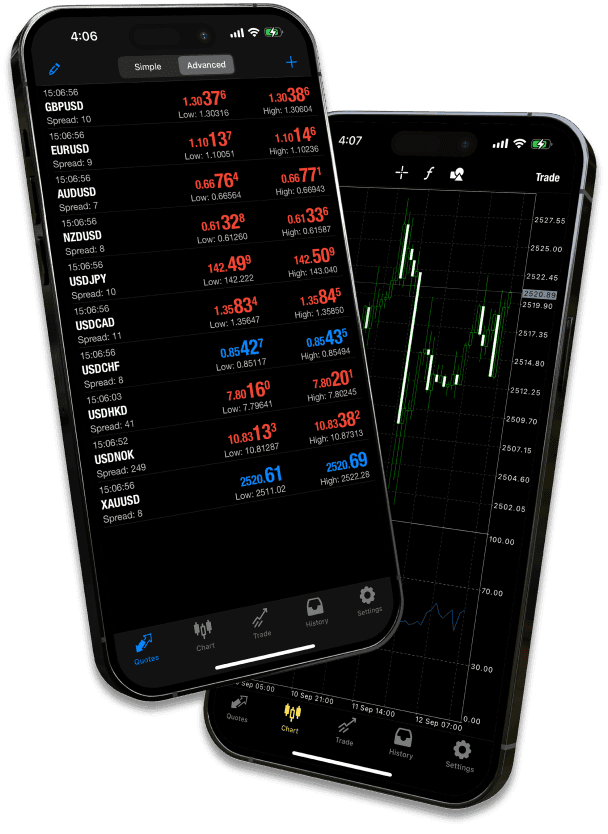
MH Markets offers demo accounts across all its supported platforms:
- MetaTrader 4 (MT4) The industry standard for forex trading. Renowned for its stability, fast execution, and extensive library of custom indicators and Expert Advisors. Ideal for beginners who want simplicity and reliability.
- MetaTrader 5 (MT5) The next-generation platform with broader asset coverage, 21 timeframes, 80+ built-in indicators, and more advanced order types. Better suited for traders who want to explore multiple markets beyond forex.
All three give you access to live market prices, real chart data, and the full suite of trading tools — the only difference is that the money isn't real.

Why Should Beginners Start with a Demo Account?
The forex market is the largest financial market in the world, with over $7.5 trillion traded daily. It is also unforgiving of underprepared traders. Statistics consistently show that the majority of retail traders who jump into live trading without adequate practice lose money — not because markets are impossible to trade, but because they haven't yet developed the trading routine of a full-time & part-time trader, discipline, or emotional resilience the market demands.
A demo account solves this by letting you:
- Learn the platform without costly mistakes — wrong order types, accidental lot sizes, missed stop-losses
- Test strategies in real market conditions without real financial consequences
- Build confidence in your analysis and decision-making before capital is on the line
- Understand how the market behaves across different sessions, news events, and volatility conditions
- Develop trading discipline — the habit of planning trades, managing risk, and journaling outcomes
Think of it the way a pilot thinks about a flight simulator. No airline would put an untrained pilot in the cockpit of a real aircraft. The simulator exists precisely so that by the time real stakes are involved, the fundamentals are already second nature.

How to Open a MH Markets Forex Demo Account — Step by Step
Opening your MH Markets demo account takes less than five minutes. Here's how:
- Visit mhmarkets.com and navigate to the demo account registration page
- Fill in your details — name, email address, and country of residence
- Choose your platform — MT4, MT5, or the MH Markets proprietary platform
- Select your demo account settings — base currency, leverage, and starting virtual balance
- Receive your login credentials via email
- Download your chosen platform (desktop, web, or mobile app) and log in using your demo credentials
That's it. You're in. From this point, the platform looks and behaves identically to a live trading account.
Setting Up Your Demo Account for Realistic Practice
One of the most important — and most commonly ignored — steps is setting up your demo account to reflect real trading conditions. The single biggest mistake beginners make is starting with an inflated virtual balance like $100,000 when they intend to eventually trade with $500 or $1,000.
Set up your demo account like this:
- Virtual balance: Match it as closely as possible to what you plan to deposit in real life. If you're planning to start with $1,000, set your demo balance to $1,000 — not $50,000.
- Leverage: Use the same leverage you intend to apply on a live account. Higher leverage may feel exciting in a demo but creates false confidence.
- Lot sizes: Trade micro or mini lots (0.01–0.1) consistent with your eventual real position sizes
- Spreads: Ensure you're seeing real spreads, not artificially tight demo spreads — MH Markets demo conditions mirror live market conditions accurately
The closer your demo environment is to your planned live setup, the more transferable your learning will be.
30-Day Structured Practice Plan for Beginners
One of the most valuable things this forex demo account guide for beginners can give you is structure. Aimless demo trading teaches you very little. Here is a practical, week-by-week plan:
Week 1 — Platform Familiarity
Goal: Become comfortable with the interface before you focus on trading.
- Navigate every section of the platform — charts, order window, account history, terminal
- Place at least 10 demo trades manually — market orders, limit orders, stop orders
- Set stop-losses and take-profit levels on every single trade from Day 1
- Explore the charting tools — add moving averages, RSI, and support/resistance lines
Week 2 — Learn One Strategy
Goal: Pick one simple trading strategy and apply it consistently.
- Choose a strategy suited to your available trading time (e.g. trend-following using moving averages, or range trading between support and resistance)
- Execute only that strategy — no improvising
- Record every trade: entry price, stop-loss level, take-profit level, reason for entry
Week 3 — Introduce Risk Management Rules
Here is our quick guide to risk management playbook from experts
Goal: Build the habit of protecting capital before chasing profits.
- Apply the 1–2% risk rule — never risk more than 1–2% of your demo balance on a single trade
- Calculate your position size before entering every trade
- Review your Week 2 trades — identify which setups worked and which didn't, and why
Week 4 — Simulate Real Trading Conditions
Goal: Trade as if every dollar is real.
- Set specific trading hours and stick to them — don't trade at random
- Track your emotions. Note when you feel the urge to overtrade, revenge trade, or ignore your stop-loss
- Do a full end-of-week review: win rate, average reward-to-risk, biggest mistakes
What to Practice on MH Markets Demo Account
Beyond mechanics, use your demo time to develop genuine trading skills:
- Reading price action — how do candles behave at support and resistance? What does a breakout look like versus a false break?
- Understanding order types — when to use market orders versus limit orders, and why it matters
- Trading around news events — observe how gold, oil, and major forex pairs react to CPI, NFP, and central bank announcements
- Multi-timeframe analysis — learn to read the daily chart for direction, the 4H chart for structure, and the 1H chart for entry timing
- Consistency under pressure — the demo is your training ground for emotional discipline, not just technical skill
Common Mistakes Beginners Make in Demo Trading
Knowing what not to do is just as important as knowing what to do. The most common mistakes in forex demo trading include:
- Not using stop-losses — "It's only demo money" is the most expensive mentality you can carry into live trading
- Oversizing positions — trading 10 lots on a $1,000 account because it's not real money creates false results and dangerous habits
- Switching strategies constantly — hopping between methods every few days means you never learn whether anything actually works
- Ignoring losses — in demo, losses feel painless. Train yourself to treat every loss as a real learning event
- Moving to live too quickly — excitement overtakes preparation. Impatience is one of the leading causes of early live account blow-ups
- Not keeping a trading journal — without records, you have no data. Without data, you cannot improve
How to Treat a Demo Account Like Real Money
The psychological gap between demo and live trading is real. Here's how to close it deliberately:
- Imagine the consequences: Before every trade, ask yourself "Would I be comfortable losing this amount in real life?"
- Follow a pre-trade checklist: write down your entry reason, your stop-loss, and your target before every trade. No exceptions.
- Respect your drawdowns: If your demo account drops 10% in a week, stop and review before continuing. Don't just reset the balance.
- Set weekly performance targets: Consistency over profitability. Aim for a specific number of well-executed trades, not a specific return.
Tracking Trades and Maintaining a Trading Journal
A trading journal is non-negotiable for any serious beginner. It is the single most effective tool for accelerating improvement. Log the following for every trade:
| Field | What to Record |
|---|---|
| Date & Time | When you entered and exited |
| Instrument | EUR/USD, XAU/USD, Oil, etc. |
| Direction | Buy or Sell |
| Entry Price | Where you got in |
| Stop-Loss | Your risk level |
| Take-Profit | Your target |
| Result | Profit or loss in pips and $ |
| Reason for Entry | Your setup and analysis |
| Emotional Notes | How you felt — hesitant, overconfident, disciplined? |
| Lesson | What this trade taught you |
Review your journal at the end of every week. Patterns will emerge. You'll see which setups have a positive edge and which are consistently losing you money — intelligence that no indicator can give you.
When to Move from Demo to Live Trading?
This is the question every beginner eventually asks. The honest answer: move when your performance data — not your feelings — says you're ready.
You may be ready to transition when:
- You have completed at least 30 consistent trading days on demo
- Your win rate is stable and your average reward-to-risk ratio is positive (e.g. 1:1.5 or better)
- You have followed your risk management rules without exception for at least two consecutive weeks
- You have a written trading plan — strategy, session, instruments, risk rules — that you follow consistently
- You understand exactly why each of your last 20 trades was taken
You are not ready if:
- You are profitable but haven't been following a structured strategy
- You have been trading with unrealistic position sizes or balances
- You are moving to live because you are bored of demo — not because your performance supports it
Transition Strategy: From Demo to Live Trading Safely
The transition from demo to live trading is not a single step — it's a gradual process. You can check our detailed step-by-step guide for your first trade. Here's how to do it without blowing your account in the first week:
- Start with a small live deposit — fund your live account with an amount you are genuinely comfortable losing entirely. This is not pessimism; it's risk realism.
- Trade micro lots initially — even smaller than your demo sizes. The emotional weight of real money changes everything. Smaller positions give you space to adapt.
- Follow the same strategy you used on demo — do not change your approach the moment you go live. Consistency is the bridge.
- Set a maximum daily loss limit — if you lose a pre-set amount in one day, close the platform and step away. Protecting your capital is the first job of a live trader.
- Review live trades with the same journal discipline — the journaling habit you built on demo must continue on live, without exception.
Building Consistency with MH Markets Demo Account
The MH Markets forex demo account is not a toy. Used correctly, it is one of the most powerful tools available to any beginner entering the financial markets. It gives you access to real market conditions, professional-grade platforms, and the time and space to make mistakes — and learn from them — without financial consequence.
The traders who use their demo period seriously, who treat virtual losses as real, who journal every trade and follow a structured practice plan, are the ones who arrive at live trading with something most retail traders never develop: a genuine edge.
Markets reward preparation. Start on demo. Respect the process. And when the data says you're ready — not the excitement — make the move.